If you own rural property in the Piedmont Triad, you've probably searched for someone to "clear the brush." Two names come up over and over: brush hogging and forestry mulching. They sound similar, but they're built for different jobs, and picking the wrong one can mean paying twice. Here's how to tell them apart and which one fits your land.
What Is Brush Hogging?
Brush hogging is rotary cutting. A heavy mower deck, usually pulled behind a tractor, spins large blades that chop down tall grass, weeds, briars, and thin woody growth.
What Is Forestry Mulching?
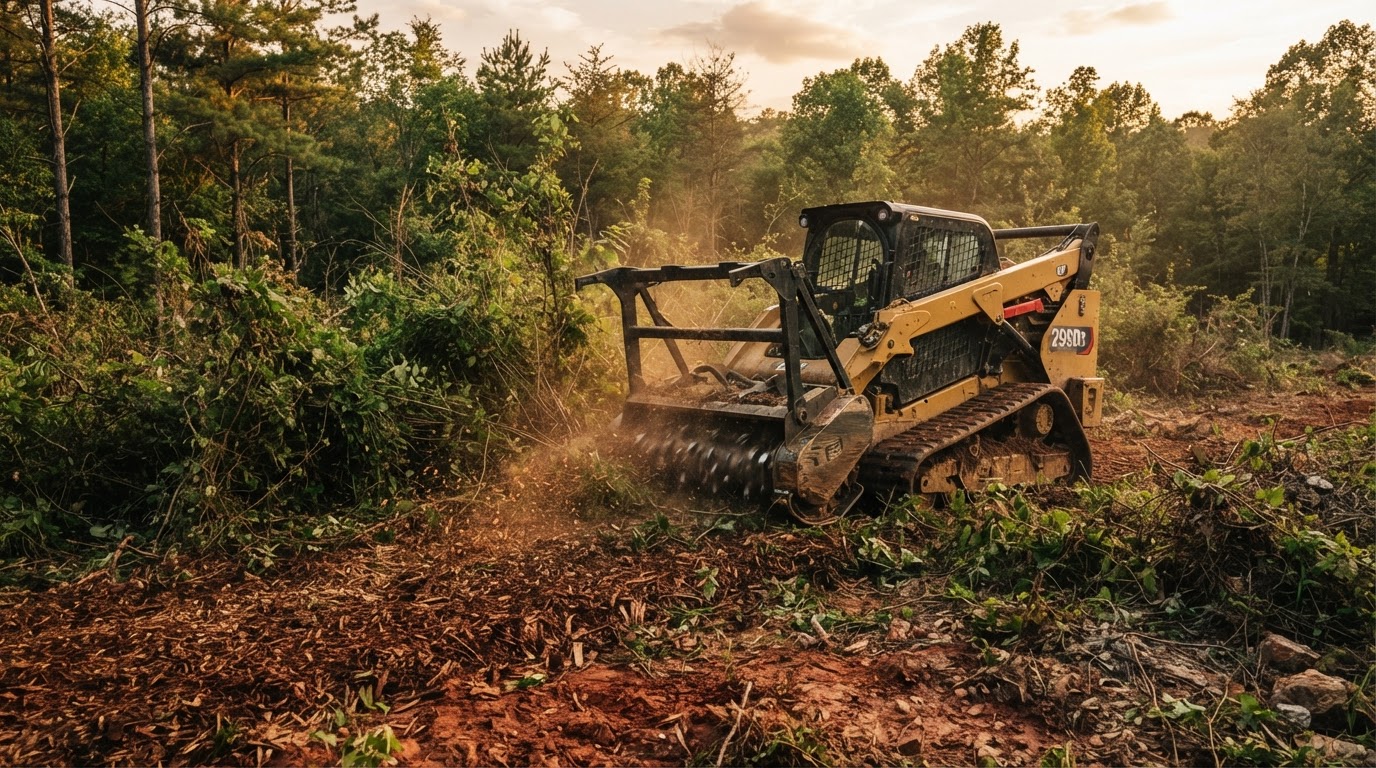
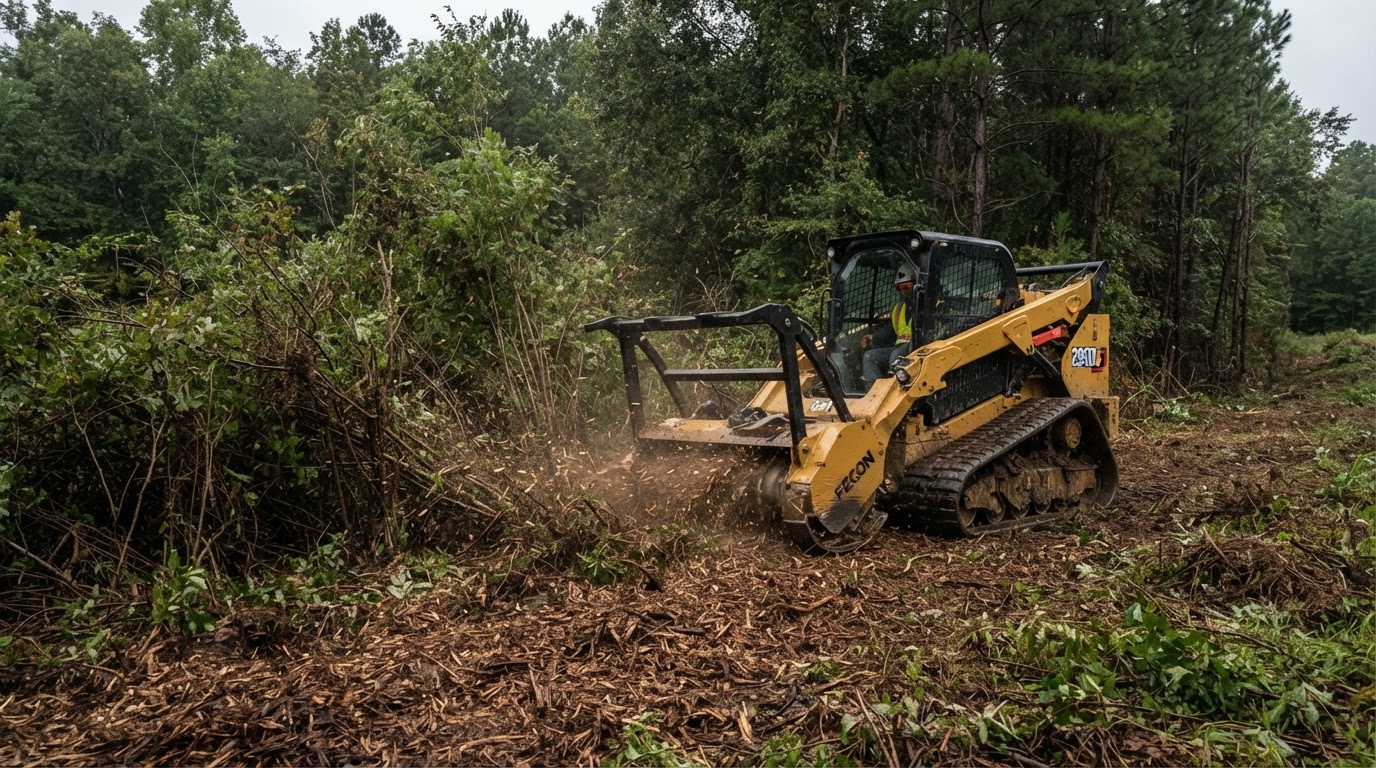
Forestry mulching uses a purpose-built machine with a heavy-duty mulching head. It grinds brush, saplings, vines, and standing trees down into a layer of mulch, right where they stand. There's no piling, no burning, and no hauling. Learn more about our forestry mulching service.
Brush Hogging vs. Forestry Mulching at a Glance
Best for — Brush hogging: grass, weeds, briars, light brush. Forestry mulching: dense brush, vines, saplings, and trees. What it leaves behind — Brush hogging: cut material lying on the ground. Forestry mulching: a mulch layer that protects the soil. Larger trees — Brush hogging: no. Forestry mulching: yes, within the machine's capacity. Stumps — Brush hogging: leaves them standing. Forestry mulching: grinds them down toward ground level. Typical use — Brush hogging: maintenance mowing. Forestry mulching: initial clearing of overgrown land.
How to Choose
Choose brush hogging if your land is mostly grass and light growth, and you want to keep it open. If you already keep up with it every year, this is the right tool. Choose forestry mulching if the land has gotten ahead of you. When you can't walk through it, or you're seeing small trees and thick vines, a brush hog isn't going to cut it. Mulching does the heavy lifting in one pass. Use both for the full picture. A lot of landowners have their land mulched once to get it back under control, then switch to periodic brush hogging to keep it that way. It's often the most practical approach.
A Note on Regrowth
Neither method is permanent. Cutting or grinding growth above ground doesn't kill the roots, so brush, vines, and some stumps can come back. If you want to keep land clear, plan for follow-up maintenance, and talk with your contractor about what to expect for your property.
Questions to Ask Before You Hire
1. What equipment will you use, and is it right for the size of growth on my land? 2. What will the ground look like when you're done? 3. What happens to the stumps? 4. How do you handle fence lines, wet areas, and steep ground? 5. Will I need follow-up maintenance, and how often? A good contractor will tell you honestly when a brush hog is all you need, and when it isn't.
Why Walk the Land First
Land that looks like light brush from the road can turn out to be something very different up close. The right method depends on how thick the growth is, how big the trees are, and what you plan to do with the property next. We walk the land with you before recommending anything.
Land Clearing Across the Piedmont Triad
Triad Land WorX is a family-owned crew handling forestry mulching, brush removal, land clearing, and property maintenance across Winston-Salem, Greensboro, High Point, Kernersville, Summerfield, Oak Ridge, Reidsville, Lexington, Thomasville, Clemmons, Asheboro, Burlington, and the greater Piedmont Triad. Trees have the bark, we have the bite. Call or text (336) 579-0564, or email Jared@TriadLandWorX.com to schedule a free on-site walkthrough. Veterans and active-duty service members receive 5% off any quoted service.