A paver patio can turn an unused corner of your yard into the place everyone ends up on a Saturday evening. But in the Piedmont Triad, a patio that looks great the day it's finished and a patio that still looks great five years later are often two very different projects. The difference almost never comes down to the pavers themselves. It comes down to what's underneath them, how water is handled, and whether the layout was planned around how you'll actually use the space. Here's what to think through before you break ground, whether you're in Winston-Salem, Greensboro, High Point, Kernersville, or out on a few acres in Summerfield or Oak Ridge.
Why Pavers Work Well for Triad Properties
They flex instead of crack. Poured concrete is one solid slab, so when the ground shifts, it cracks. Pavers are individual units set on a compacted base, so they move slightly with the ground and can be lifted and reset if one section settles. Repairs are simple — a stained or damaged paver can be swapped out without tearing up the whole patio. You have real design options, too: colors, textures, patterns, borders, and shapes let you match the home, the landscaping, or the style of an existing walkway. And water can drain through the joints — properly installed pavers with the right joint material allow some water to move through the surface instead of sheeting off in one direction.
The Part You Never See: Base Preparation
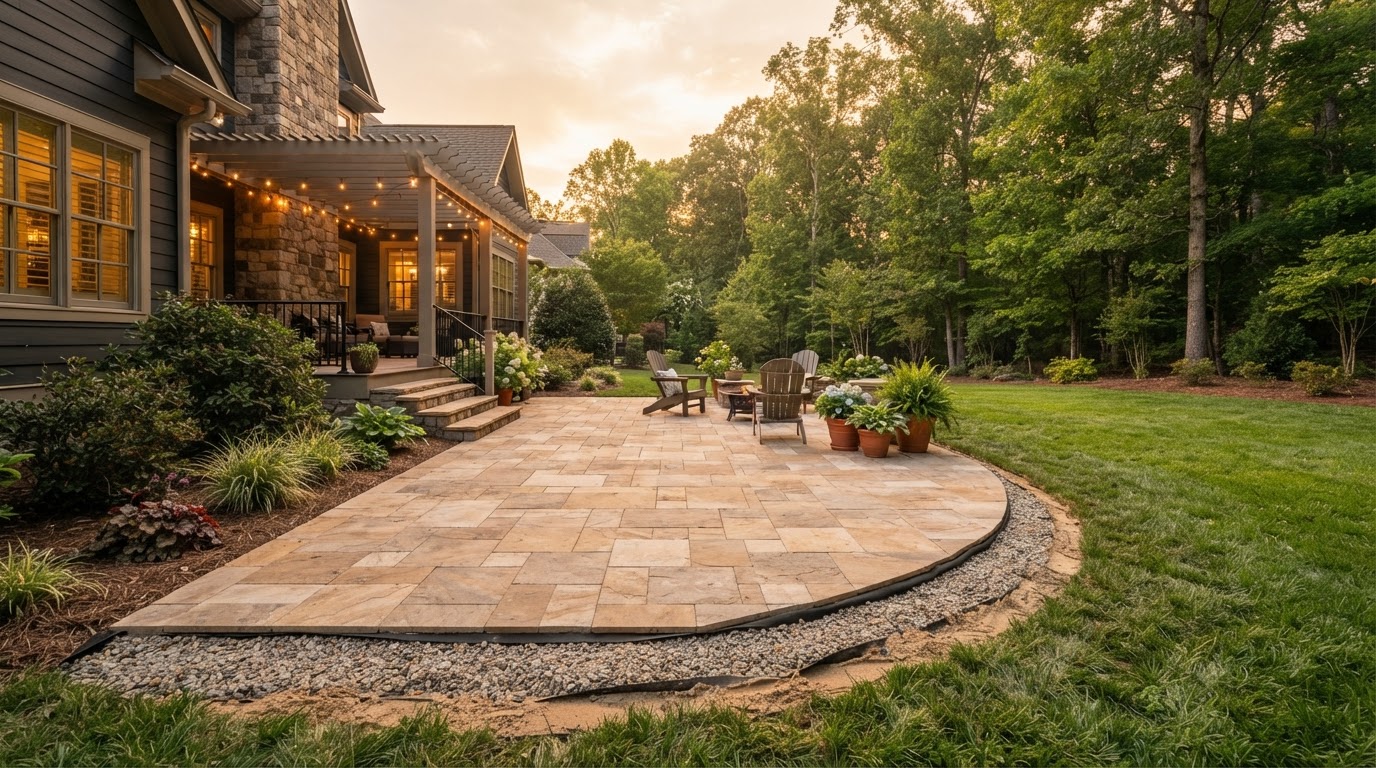
If you remember one thing from this post, make it this: the base is the patio. The pavers are the finish layer. Everything that determines whether the surface stays level lives underneath. A properly built paver patio generally includes: 1. Excavation — the area is dug out to the right depth for the base layers plus the pavers themselves. 2. Compacted subgrade — the native soil is compacted so it's firm and even before anything goes on top of it. 3. Compacted aggregate base — layers of crushed stone are added and compacted in stages, not dumped in all at once. 4. Leveling layer — a thin, even bedding layer is screeded smooth so the pavers sit flat. 5. Edge restraint — a firm border keeps the pavers from spreading outward over time. 6. Joint material — sand or polymeric sand is swept into the joints and compacted to lock everything together. Skipping or rushing any of these is how patios end up with dips, wobbling pavers, and weeds pushing through the seams.
Why Clay Soil and Water Change the Plan
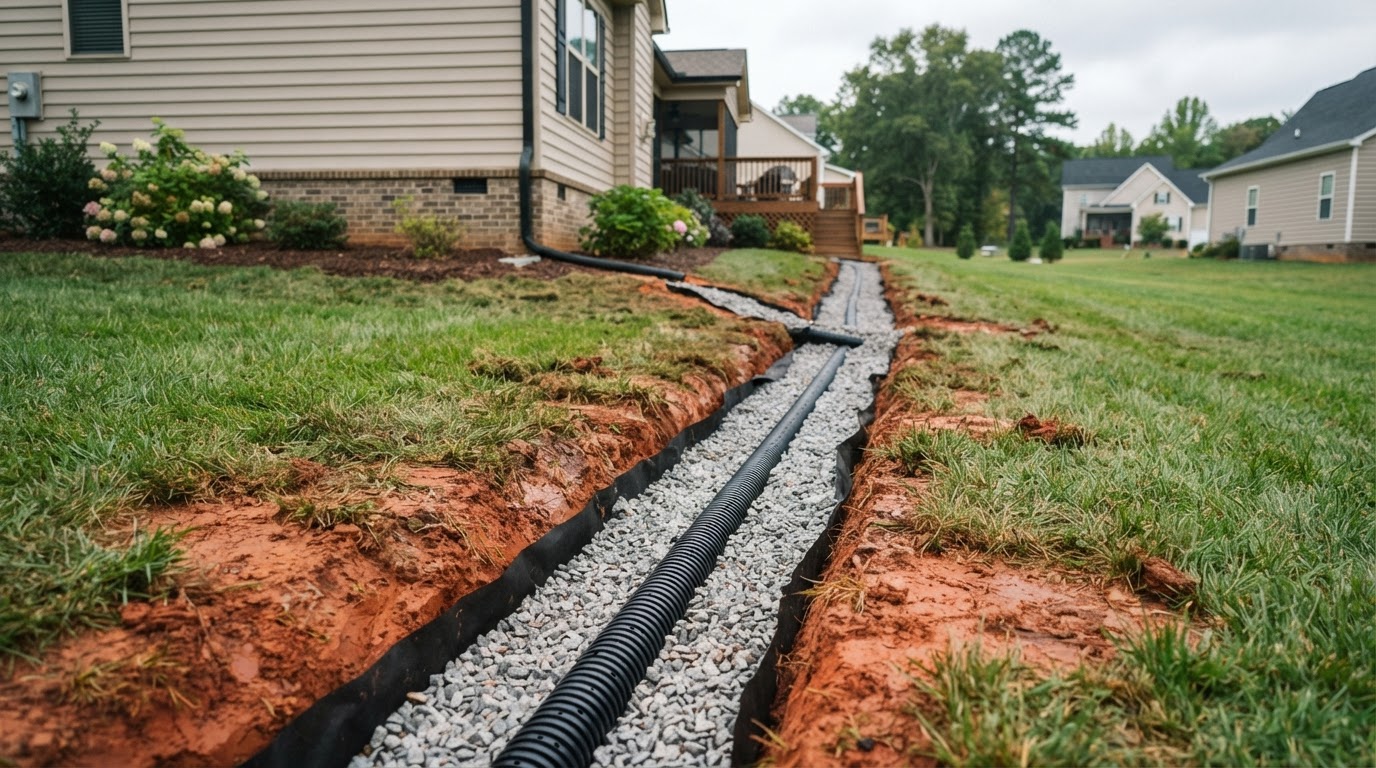
Much of the Piedmont sits on dense clay. Clay holds water, drains slowly, and can swell and shrink as it wets and dries. For a patio, that means two things. First, drainage has to be designed in from the start: the surface should slope gently away from your home, and you should know where runoff from the patio will actually go. If water has nowhere to go, it will find a way under the pavers. If your yard already holds water after rain, it's worth addressing the drainage first — our guide on standing water and French drains in the Piedmont Triad covers the common fixes. Second, a thicker, well-compacted base matters more on clay. A shallow base over soft, wet clay is one of the most common reasons patios settle unevenly.
Think About How You'll Use the Space
Before choosing a size or shape, ask yourself a few practical questions. How many people do you want to seat comfortably? A table for six needs more room than most people expect, once you account for pulling chairs out. Will there be a grill or outdoor kitchen? Heavier features need to be planned in from the start, along with clearance and safe distance from the house. Do you want a fire pit or seating wall? These are easiest to build into the original design rather than adding later. Is the patio close to the door, or a destination in the yard? A patio off the back door has different needs than a gathering spot set farther out. And how will you get there? A paver walkway connecting the patio to the driveway, steps, or gate makes the whole project feel finished.
Add Lighting and Irrigation While the Ground Is Open
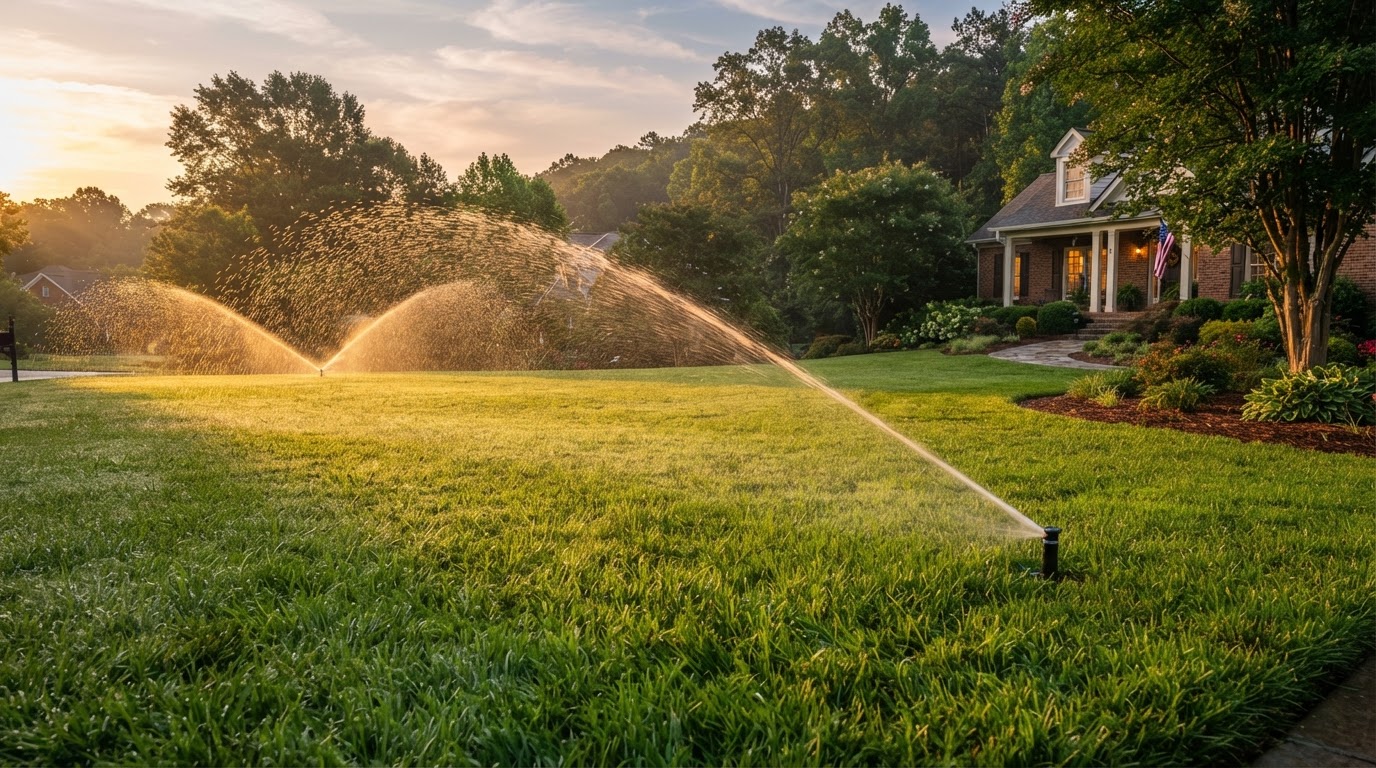
The best time to run outdoor lighting wiring and adjust irrigation lines is before the pavers go down, while the area is already excavated. Trying to add either one afterward often means cutting into or lifting finished work. Outdoor lighting — path lights, step lights, and accent lighting along walls — extends how long you can use the space after dark and makes steps safer; conduit and wiring are easy to place during excavation. Irrigation matters too: if sprinkler lines run near the patio footprint, they may need to be rerouted or capped. Handling it up front avoids broken lines and soggy surprises later. If you're also considering a new system, our irrigation installation guide explains what to plan for.
Questions to Ask Any Hardscape Contractor
Whoever you hire, ask: How deep will you excavate, and what does the base layering look like? How will you handle drainage and slope? What edge restraint do you use? How do you finish and lock the joints? Can you coordinate lighting and irrigation changes as part of the same project? Who handles site cleanup and leftover material? A contractor who can answer these clearly and without hesitation has probably built a lot of patios that held up.
Why a Land Company Is a Good Fit for Hardscaping
Patios, walkways, and retaining features are really site work. They depend on grading, drainage, soil, and how the surrounding landscape is handled. Triad Land WorX is a family-owned, full-service landscape company that already does the excavation, drainage, irrigation, and landscape construction side of the work. Having one crew look at the whole property means the patio, the lighting, and the water all get planned together instead of patched together.
Ready to Plan Your Patio?
We'll walk your property, talk through how you want to use the space, and give you a straight answer on what it will take to build it right. Call or text (336) 579-0564 or email Jared@TriadLandWorX.com to schedule a free on-site walkthrough. Trees have the bark, we have the bite. Active duty and veterans receive 5% off any quoted service.