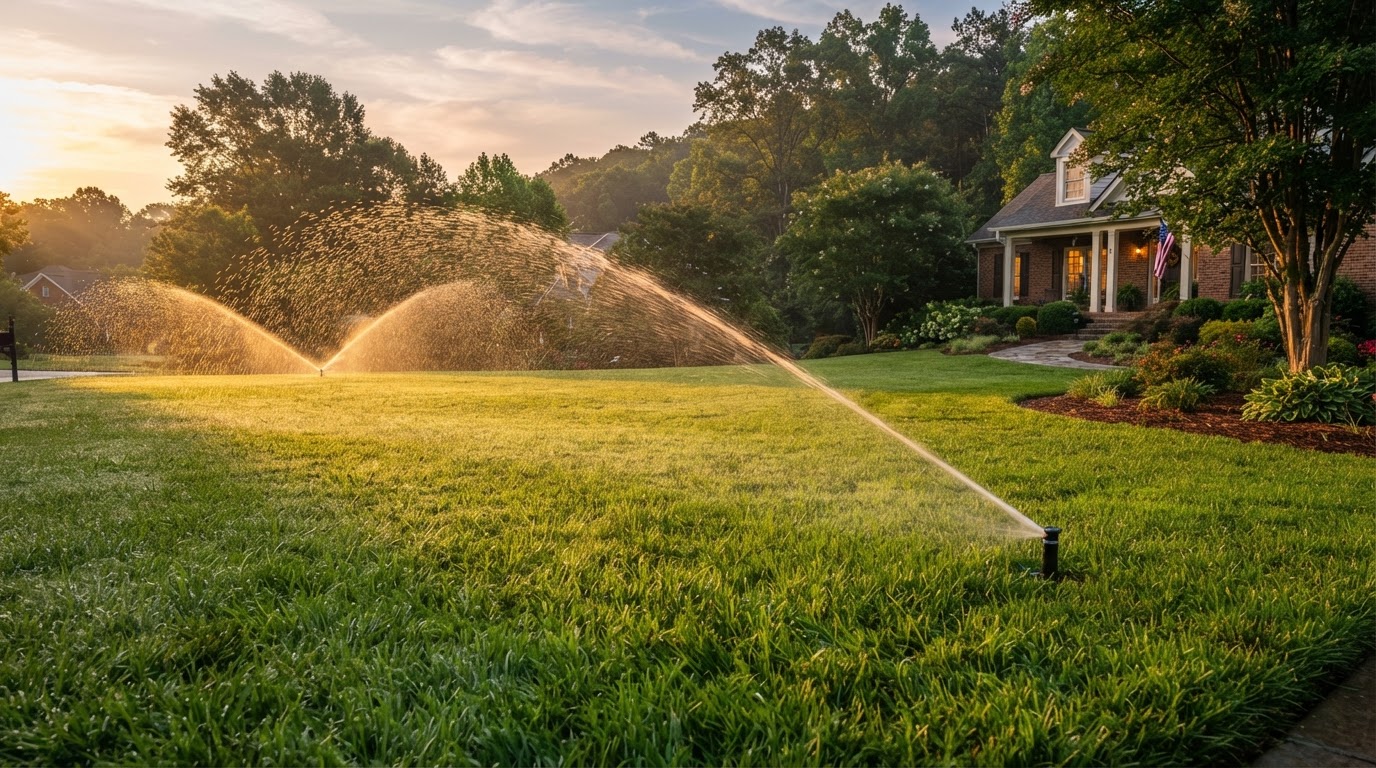
A good irrigation system waters your lawn and beds evenly and on a schedule, whether or not you're home. A bad one leaves dry patches, soggy spots, and wasted water. The difference is almost always in the design and installation, not the equipment. If you're thinking about an irrigation system for your home, farm, or rural property in the Triad, here's what to understand before the trenching starts.
Is an Irrigation System Worth It?
For most homeowners, it comes down to a few things. Consistency: lawns and landscaping do better with regular, deep watering than with whenever-you-remember watering. Time: no more dragging hoses or moving sprinklers around the yard. Coverage: a properly zoned system reaches the corners, slopes, and beds that hose-end sprinklers miss. Property value: a well-installed system with a healthy lawn adds curb appeal. Irrigation makes the most sense for larger lawns, new sod or seed, and properties with landscape beds, new plantings, or a lot of mixed areas to keep watered.
What Goes Into a Professional Irrigation Design
1. Zones. Lawn, shrub beds, and garden areas need different amounts of water. A good design splits the property into zones so each area gets what it needs and nothing more. 2. The right heads for each area. Rotor heads cover large open lawn. Spray heads suit smaller or irregular areas. Drip lines deliver water directly to plant roots in beds and around trees, with less waste. 3. Head-to-head coverage. Spray patterns should overlap so there are no dry spots between heads. This is one of the most common problems in rushed installs. 4. A controller you'll actually use. Modern controllers let you set schedules by zone, adjust seasonally, and often manage everything from your phone. 5. Rain sensor. A rain sensor tells the system to skip a cycle after rainfall. It's a small add-on that prevents a lot of waste. 6. Backflow prevention. Protecting your home's drinking water from contamination is part of a proper install. Requirements can vary by jurisdiction, so make sure your installer knows the local rules.
Piedmont Triad Conditions to Plan For
Red clay soil. Clay absorbs water slowly and sheds it quickly, especially on slopes. That means shorter, more frequent run times in some zones so water soaks in instead of running off. A good installer accounts for this in the schedule. Slopes and rolling terrain. Hills change how water moves. Heads on slopes need careful placement, and zones may be split so the low areas don't get flooded while the high areas stay dry. Mature trees. Roots affect trenching routes and head placement. Planning the layout around existing trees avoids damage and keeps coverage even. Winter freezes. The Triad gets freezing temperatures, so your system should be winterized each fall by clearing water from the lines, and started back up in spring.
Irrigation for Rural and Farm Properties
Larger lots and rural properties have their own considerations: longer pipe runs, well versus municipal water supply, and pump sizing. Irrigation can also be planned alongside pasture work, fence lines, and landscape areas around the house, so it pays to design everything together.
Questions to Ask Before You Hire an Irrigation Installer
Will you design the system for my specific property, or use a standard layout? How many zones will I have, and why? What type of heads will you use in each area? Will the system include a rain sensor and a smart controller? How do you handle backflow prevention? Who winterizes and starts up the system each year? What happens if a head or line is damaged after install?
Plan Irrigation With Your Landscaping, Not After It
The best time to install irrigation is before sod, new beds, patios, or hardscapes go in. Trenching through finished work means repairs and extra cost. If you're clearing land, building a patio, or putting in new landscaping, plan the irrigation at the same time so everything goes in once and in the right order.
Get Your Irrigation Planned Right
Triad Land WorX is a family-owned company serving Winston-Salem, Greensboro, High Point, Kernersville, Summerfield, Oak Ridge, Reidsville, Lexington, Thomasville, Clemmons, Asheboro, Burlington, and the greater Piedmont Triad. We handle irrigation installation along with forestry mulching, land clearing, fencing, and landscape construction, so your project doesn't need multiple crews. Trees have the bark, we have the bite. Veterans and active-duty service members receive 5% off any quoted service. Ready to plan your irrigation system? Call or text (336) 579-0564 or email Jared@TriadLandWorX.com to schedule a site visit.