
A good horse pasture fence is 4.5 to 5 feet tall, highly visible, smooth on the horse side, and built on deep, braced corner and gate posts. Wood boards, vinyl rail, and no-climb woven wire are the most common choices, and electric wire or tape adds a deterrent on top. Horses are strong, curious, and quick to panic. A fence that works for cattle can injure a horse, and a fence that looks sturdy can still fail if the posts are too shallow or the corners aren't braced. Here's how to choose materials, set spacing, and lay out a pasture that holds up in Piedmont North Carolina clay and wet seasons.
Horse Fence Materials Compared
No single material is best for every property. Pick based on your herd, your budget, and how much maintenance you want to do. Wood board (3 to 4 rails) is very visible with a classic, strong look when well built; its drawbacks are that it needs painting or staining, horses chew it, and boards warp and break; it's best for front pastures and property lines near the road. Vinyl or PVC rail is low maintenance, visible, and splinter-free, but it has a higher upfront cost, can crack on impact, and is less forgiving if a horse hits it; it's best for show properties and low-maintenance setups. No-climb woven wire has small 2 by 4 inch openings that keep hooves out, which is good for foals and mixed livestock, but it's less visible alone, needs a top rail or electric strand, and can be hard to repair if damaged; it's best for large pastures and mixed horse and livestock farms. Electric tape or rope is highly visible, flexible, and the lowest cost per foot, but it needs a charger and regular checking, and vegetation shorts it out; it's best for cross-fencing and rotational grazing. High-tensile electric wire offers long spans and low maintenance once tensioned, but it's hard to see unless paired with tape and needs proper tensioning and grounding; it's best for large acreage and perimeter backup. Pipe or steel rail is extremely durable and strong, but it's high cost and unforgiving on impact; it's best for stallion paddocks and high-traffic areas. Three things to avoid for horses: barbed wire, thin single-strand wire that horses can't see, and welded wire with openings large enough to catch a hoof.
Post Spacing, Fence Height, and Gates
Most of a fence's strength comes from its posts. Fence height should be 4.5 to 5 feet for most horses, and taller for stallions or horses that test fences. Post spacing for a board or rail fence is about 8 feet apart; for woven wire it's 8 to 12 feet apart; and for high-tensile wire it uses wider spans with stays between posts, set by the wire manufacturer's guidance. Post depth should be at least one third of the post's length underground, and deeper for corners and gates. Corner and gate posts should be larger diameter, set deeper, and braced. Gate width should be 12 feet for tractors and equipment, with a smaller walk-through gate where handy. A few details separate a fence that lasts from one that leans after two winters: brace every corner and gate post, since these carry the pull of the whole fence line and an unbraced corner is the most common failure point; use ground-contact rated posts, with pressure-treated pine being common and black locust lasting longer but costing more; set posts for wet clay, since Triad soil holds water and moves with the seasons, so drainage and tamped, compacted backfill matter; and keep the bottom rail or wire off the ground, leaving enough clearance to mow and keep moisture from rotting boards, but avoiding gaps a foal could slip through.
What Horses Actually Respect
Horses respect fences they can see and fences that feel solid. They push through ones they can't see or that give way too easily. A few things drive that behavior. Visibility: horses are prey animals with a blind spot directly in front of their nose, so white boards, vinyl, and bright electric tape read clearly while thin wire doesn't. Tension and solidity: a loose or sagging fence invites leaning, rubbing, and pushing, while tight wire and well-set posts hold their line. Safety: a horse in a panic will run into a fence, so smooth surfaces, no protruding nails or wire ends, and no gaps that catch a hoof or a head keep that from becoming a serious injury. Habit: a horse that has been shocked once by a hot top wire will usually keep its distance, and a strand of electric along the top of a wood fence also stops chewing and leaning. Fence the pasture so a horse that bolts hits something forgiving, and so a bored horse has nothing easy to lean on or chew.
Plan the Layout Before You Set a Post
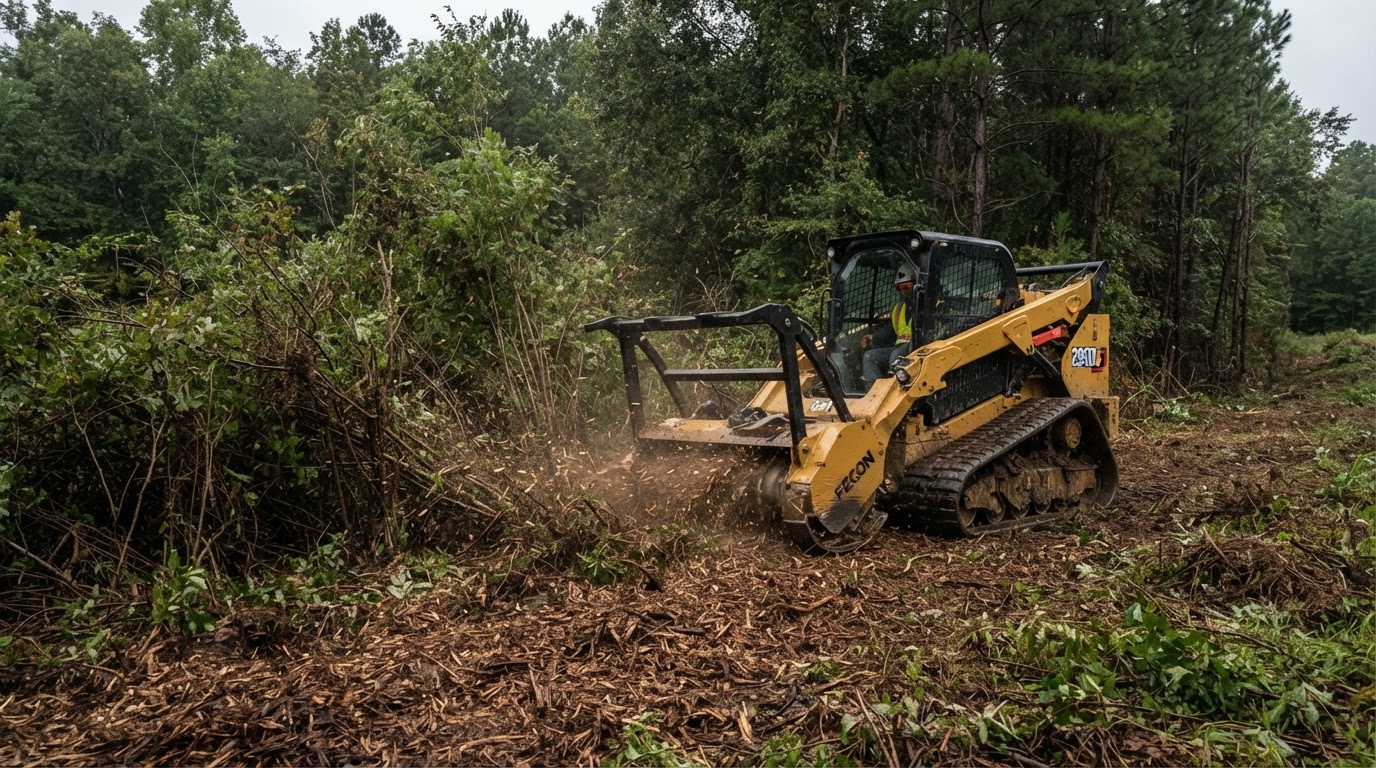
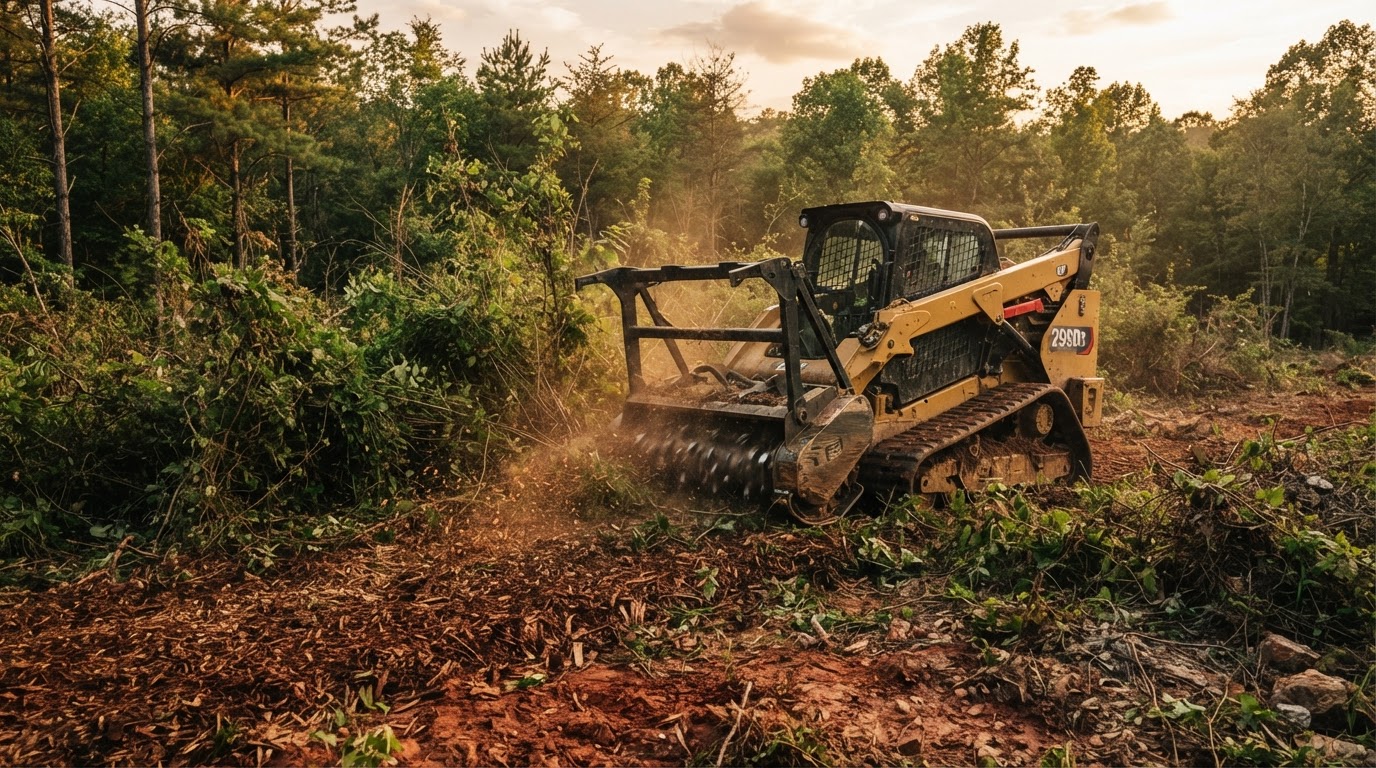
Most fence problems come from decisions made before the first post goes in. Clear and survey the fence line: brush, stumps, and small trees along the line make straight, tight fencing impossible, and on overgrown property, forestry mulching clears the line fast without leaving brush piles to haul. Avoid tight corners: round off or cut the corners of the pasture so a horse that gets pushed by another can't be trapped. Think about drainage: low spots that hold water rot posts and turn into mud around gates, so route runoff away from the fence line and gate areas. Place gates for how you work: put them where a tractor, trailer, and hay delivery can reach, and keep them out of corners. Plan water and shelter: position them so horses can reach them without crowding the gate. And check the property lines and local rules: confirm boundary lines and any county, HOA, or utility easement limits before you build.
What Drives the Cost of a Horse Fence
Horse fencing costs vary a lot from one property to the next. These factors move the price the most: total linear feet and the shape of the pasture, since every corner adds bracing; material choice, from electric tape at the low end to vinyl or pipe at the high end; terrain and soil, including slopes, rock, and wet clay; land prep, such as clearing brush, trees, and stumps from the fence line; number and size of gates; and access for equipment, which affects how fast posts can be set. Because these factors differ on every property, the most reliable number comes from a site visit.
DIY or Professional?
A short, simple paddock is a reasonable DIY project if you have the tools. Larger pastures, long runs, or fences that need machine-set posts and tight corner bracing usually go faster and last longer when a crew builds them. Setting posts square, deep, and braced is where hand-built fences most often fall short.
Need Horse or Livestock Fencing in the Triad?
Triad Land WorX is a family-owned crew that clears land and builds horse and livestock fencing for rural properties across the Piedmont Triad, including Winston-Salem, Greensboro, High Point, Kernersville, Summerfield, Oak Ridge, Reidsville, Lexington, Thomasville, Clemmons, Asheboro, and Burlington. We can clear the fence line, set and brace the posts, and build the fence in one project. Call (336) 510-8900 for a free estimate. Veterans and active-duty service members get 5% off any quoted service.