You bought the acreage. Maybe it's for a home, a barn, a shop, or a pond. Now you're standing in a field of brush and red clay wondering where to start. Site prep is the unglamorous work that decides whether everything built on top of it lasts. Skip steps or do them out of order, and you end up with standing water, cracked slabs, and washed-out driveways. Here's how site prep works for rural property across Winston-Salem, Greensboro, High Point, Kernersville, and the greater Piedmont Triad.
Step 1: Walk the Property and Define the Plan
Before any equipment moves, decide what's going where: the building footprint, driveway route, utilities, septic area, and any pond or pasture. Mark property lines and anything you want to keep, like mature shade trees or a creek buffer. A site walk with your contractor catches problems early — it's much cheaper to move a building pad on paper than after the grading is done.
Step 2: Check Permits and Requirements First
Rules vary by county and municipality, so confirm with your local planning and inspections office before work starts. Things to ask about: building and grading permits; erosion and sediment control requirements, which can apply when you disturb larger areas of land; septic or perc evaluations through your county health department; and driveway access and setback requirements. Getting this sorted early keeps your schedule from stalling halfway through the project.
Step 3: Clear the Land
Brush, small trees, and vines have to go before anything else. On wooded or overgrown lots, forestry mulching is often the fastest route because it grinds vegetation in place with no burn piles and no hauling. Larger trees or stumps in the building footprint may need separate removal. If you're deciding between methods, see our guides on forestry mulching vs. traditional land clearing and what land clearing costs in the Piedmont Triad.
Step 4: Plan Drainage Before You Grade
This is the step most people underestimate. Much of the Piedmont sits on dense clay that drains slowly, so water has to be directed on purpose. Good site prep considers which way the land naturally slopes, where roof and driveway runoff will go, whether low spots need to be filled or drained, and whether swales, culverts, or French drains are needed. Fixing drainage after construction is far harder than building it into the grade from day one. For more on how this works locally, read our post on French drains and drainage solutions.
Step 5: Excavate and Grade
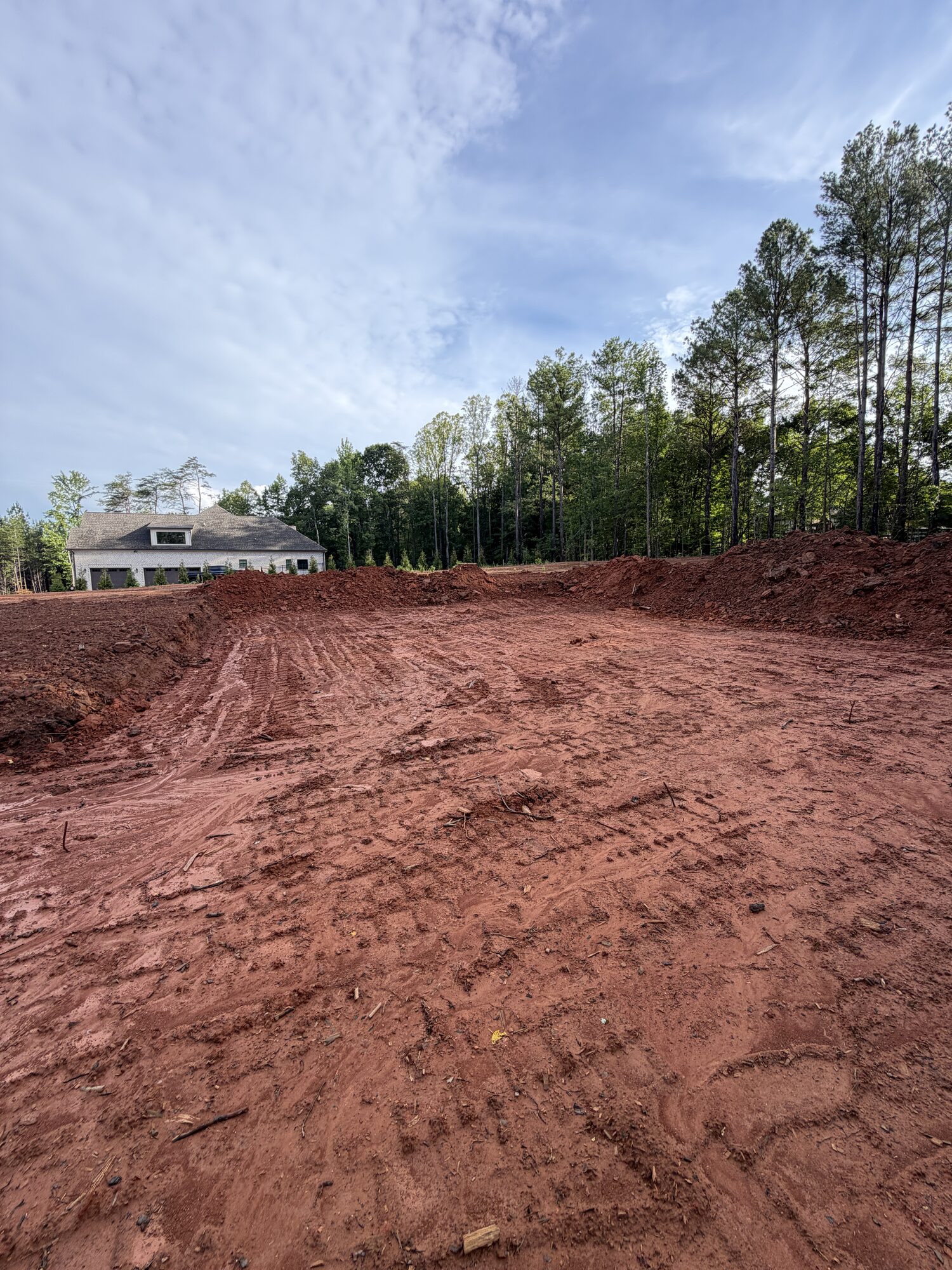
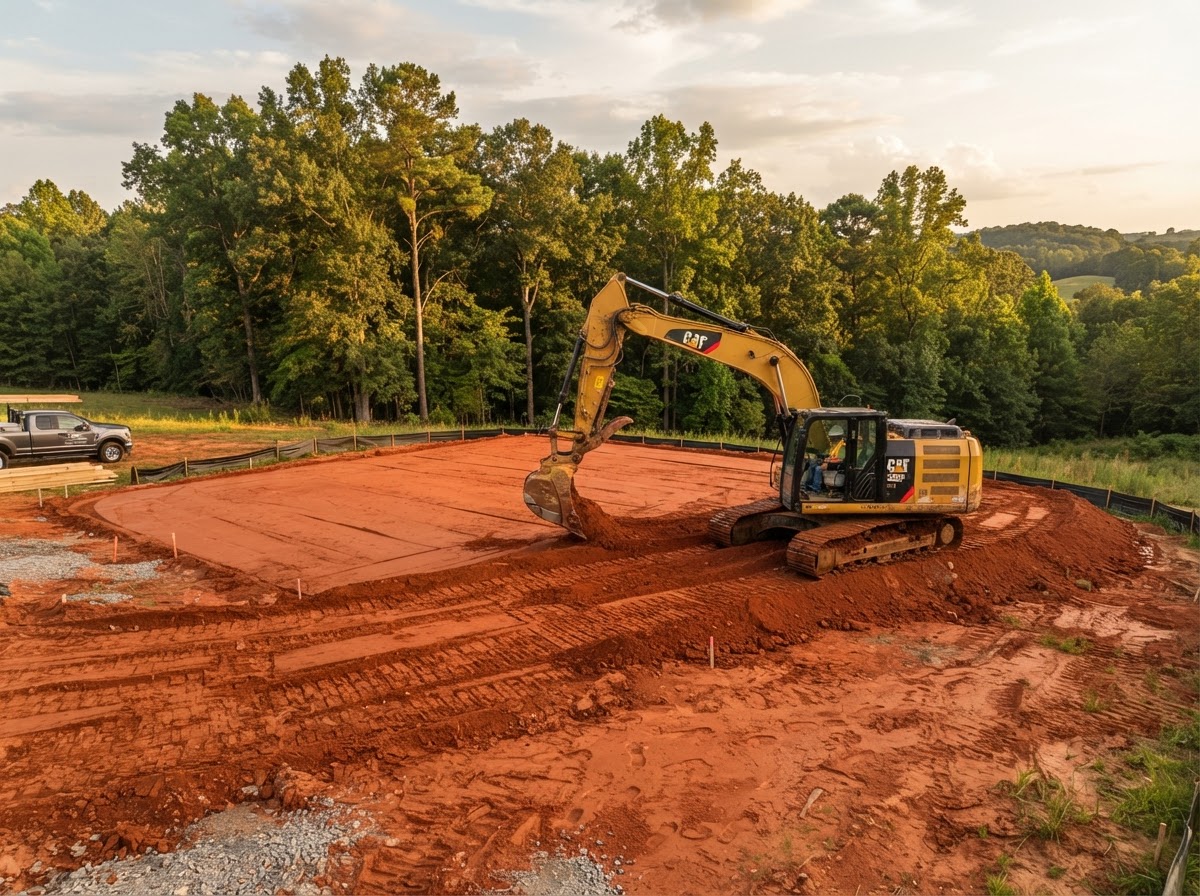
Once the site is cleared and the drainage plan is set, excavation shapes the ground: leveling the building pad, cutting in the driveway, and grading so water moves away from structures. The goal is a stable, properly sloped surface, not just a flat one. Clay soil that's worked when it's too wet turns to mud and compacts poorly, so timing matters — a good contractor will tell you when to wait for the ground to dry out.
Step 6: Build Stable Pads and Access Roads
Building pads and driveways need a solid base. Soft spots, poor compaction, or skipped base material show up later as ruts, settling, and washouts. Heavy trucks delivering lumber, concrete, or livestock trailers are hard on a weak base.
Step 7: Protect the Bare Ground
Once the vegetation is gone, bare soil erodes fast during heavy rain. Seeding, straw, or erosion control measures keep your hard work, and your neighbor's property, from washing downhill.
Questions to Ask Before You Hire a Site Prep Contractor
1. Will you walk the property with me before giving a quote? 2. How do you handle drainage and grading on clay soil? 3. What's included: clearing, stumps, grading, base material? 4. Who handles permits and erosion control requirements? 5. What happens if you hit rock, a wet area, or buried debris? 6. Can you also help with follow-up work like irrigation, fencing, or landscaping?
Frequently Asked Questions
What is site prep? Site prep is the work done to get raw land ready for construction: clearing vegetation, planning drainage, excavating, grading, and building stable pads and access roads. What comes first, land clearing or grading? Clearing comes first — vegetation has to be removed before the ground can be graded and shaped. Do I need permits for site work in North Carolina? Often yes, depending on your county and how much ground you're disturbing — check with your local planning and inspections office before starting. Why does clay soil matter for site prep? Clay drains slowly and compacts poorly when wet, so it needs careful grading, drainage planning, and good timing. Can one company handle clearing, grading, and drainage? Yes — using a single contractor for the whole sequence keeps the work coordinated and avoids gaps between crews.
Start Your Project on Solid Ground
Triad Land WorX is a family-owned company serving Winston-Salem, Greensboro, High Point, Kernersville, Summerfield, Oak Ridge, Reidsville, Lexington, Thomasville, Clemmons, Asheboro, Burlington, and the greater Piedmont Triad. From clearing to drainage to the finished landscape, we can handle the work in the right order. Trees have the bark, we have the bite. Call or text (336) 510-8900 or email Jared@TriadLandWorX.com to schedule a free on-site walkthrough. We're open Monday through Saturday, 7 AM to 8 PM. Active duty and veterans receive 5% off any quoted service.